


Luxor: The World’s Greatest Open-Air Museum
Luxor, its a city, but you'll feel like it’s the world's greatest open-air museum with the endless amount of palaces, temples, and monuments. Walking through Luxor will provide you with the experience that you're still in Ancient Egypt, with how well-preserved the temples and tombs are.
Learn more about Luxor

Discovered in 1922, the Valley of Kings is the site of the tombs that belong to the 63 most important and influential pharaohs in the history of Ancient Egypt. One of the most impressive and important discoveries in this area was the tomb of Tutankhamun. This pharaoh became very famous because his tomb shocked archeologists since it was the only tomb discovered with all the pharaohs’ belongings (nothing was missing) which included his treasures, furniture, and ample amounts of food and wine. The Valley of Kings has held treasures that have led archeologists to continue being fascinated and continuously discovering new treasures for nearly two centuries. The site is so large that with famous and unique collections, breathtaking ruins and views, and an abundance of historical information; we doubt you will be able to see everything in one visit, especially since new discoveries are being made here every week!

Built in 1400 BCE, the Luxor Temple is one of the best-preserved ancient monuments in the world; containing well-preserved structures, statues, and carvings. Luxor's treasures in this temple have gained it the status of "The World's Largest Outdoor Museum." The temple was constructed out of sandstones extracted from the historic Nubian regions and is surrounded by a mudbrick wall. This temple symbolizes the separation between the regular world and the sacred realm of the gods. It’s unique compared to other temples because it was not built to be a place to worship or show respect to the gods or pharaohs, instead it was built in dedication to the concept of the rejuvenation of kingship.


The Temple of Deir el- Bahari was built around 1478 BC and is one of Queen Hatshepsut’s most famous projects. Queen Hatshepsut’s reign is regarded as one of Egypt’s most prosperous times with expanded trade relationships and the building of many prolific projects. Queen Hatshepsut holds the longest and most successful female reign of Egypt, and her love of beautiful architecture is shown with the many buildings throughout the Nile Valley and the number of statues created in her image. Her most famous legacy is Deir El-Bahari, and its unique peristyle design is admired by historians and is regarded as unrivaled until the rise of Classical Greek buildings.
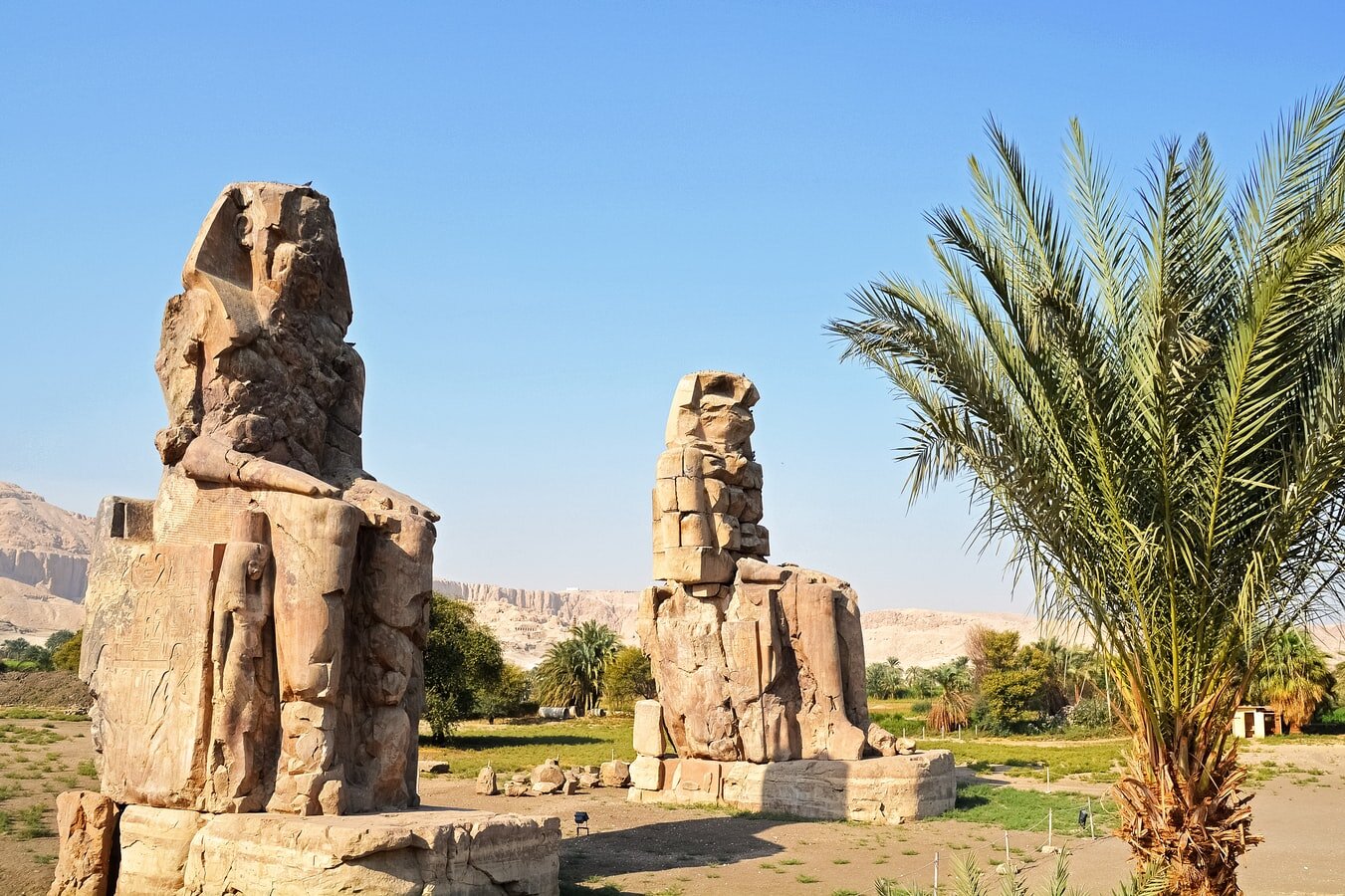
Located in the West Bank of Luxor Egypt, the Colossi of Memnon are two twin colossal statues made of quartzite sandstone and were made in the image of the pharaoh Amenhotep III and two smaller statues carved out by his feet to represent his wife and mother. These statues tower in front of the Amenhotep Temple and were meant to protect it from evil forces and even though a severe earthquake destroyed the temple, the statues still stand today. After the severe earthquake in 27 BC, it was said that the remains of the colossi would start to “sing” an hour before sunrise. This legend of the “Vocal Memnon” is said to bring good luck to those who listen to its strange blowing sounds. This event attracts people from many around the world and is a mystery of Ancient Egypt that is worth experiencing.

Used between 1292-1075 BC, the Valley of Queens is an underground area with 90 tombs used for royal queens and their husbands who passed away. Just like the Valley of the Kings, the Valley of Queens originally held treasures, artwork, food, and drink that were originally buried with the queens, however, almost all the treasures have been stolen by thieves or moved to museums. While you are not able to visit all 90 tombs, some of the tombs are open for visitors and the most popular one being the Tomb of Queen Nefertiti. This tomb is beautifully decorated with art and paintings that describe Queen Nefertiti’s life and her husband King Akhenaten.


The Esna Lock is a structure that links Luxor and Aswan. It's a picturesque moment with spectacular views of the two cities. You might encounter merchants on small boats, you'll be able to drop cash inside their boats from your ship and in exchange they'll swing up their goods to deliver them to you.
Dating back to 2055 BC, the Karnak Temple Complex is a large area located in the city of Karnak which translates to “fortified city.” This complex houses several temples, chapels, and other buildings to form a village. The Karnak Temple was the center of ancient faith but also served as a treasury, administrative building, and palace for the New Kingdom Pharaohs. It is divided into three precincts in honor of the three gods it was built for. The first and most popular precinct was built after Amun, the god of sun and air. The second precinct is named after Mut, the mother goddess, and the third precinct is named after Khonsu, god of the moon. The Karnak Temple Complex has a sound and light show at night offered in several different languages that is worth seeing. The Karnak Temple Complex is also considered as an open-air museum and is the largest religious building or site in the world.